How do you evaluate ethical risks in TTS voices?
TTS
Ethics
Speech AI
 23 January 2025
In the realm of text-to-speech (TTS) technology, addressing ethical risks is not optional. As TTS systems become embedded in products, platforms, and services, their influence on user perception and communication grows.
If a voice unintentionally reinforces stereotypes, misrepresents cultural identity, or behaves inappropriately in sensitive contexts, it can erode user trust and damage the credibility of the system.
Ethical evaluation therefore needs to be a structured part of the TTS development lifecycle.
Why Ethical Evaluation Matters in TTS
TTS systems often act as the “voice” of a digital product. That voice shapes how users perceive the system and how comfortable they feel interacting with it.
For example, if a TTS voice consistently mispronounces culturally specific names or uses tone patterns that reinforce stereotypes, users may feel excluded or misrepresented. These issues are not just technical defects. They represent ethical risks that can affect inclusivity and trust.
Key Areas to Evaluate Ethical Risks in TTS Voices
Bias Detection:
Evaluation should test whether the system behaves consistently across diverse linguistic and cultural contexts.This includes identifying issues such as:
Mispronunciation of names from specific cultural groups
Unnatural tone patterns associated with certain dialects
Bias in how the system handles language variations
If a TTS system consistently struggles with particular accents or names, it signals a potential bias in the training data or model design.
Contextual Appropriateness:
A TTS voice must align with the context where it will be used.
For example:
A friendly conversational voice may work well in a children’s application.
A clinical voice that prioritizes clarity and empathy may be necessary in healthcare environments.
Evaluations should verify whether the voice tone and delivery match the expectations of the target application.
User Feedback Mechanisms:
Real users often notice ethical or perceptual issues that automated testing cannot detect.Collecting structured feedback allows teams to identify problems such as:
Voices that feel culturally insensitive
Tone mismatches in sensitive contexts
Perceptions of bias or exclusion
User feedback serves as an early warning system for ethical concerns.
Transparency in Voice Development:
Ethical evaluation requires transparency in how voices are designed and selected.Organizations should document:
The training data sources used to develop voices
The criteria used for selecting voice characteristics
The evaluation methods used to validate fairness and inclusivity
Clear documentation improves accountability and builds trust among stakeholders.
Continuous Monitoring:
Ethical risks can evolve over time as models change or new datasets are introduced.
Evaluation should therefore continue after deployment.Monitoring systems can detect:
Behavioral drift in voice performance
New bias patterns emerging in updated models
Changes in user perception across different regions or demographics
Practical Takeaway
Managing ethical risks in TTS requires a structured evaluation approach rather than ad-hoc checks.
Strong ethical evaluation frameworks typically include:
Bias testing: ensuring consistent performance across languages and demographics
Context-aware evaluation: verifying that voices fit their intended application environments
User feedback systems: capturing real-world perception signals
Transparent documentation: explaining how voices are created and evaluated
Continuous monitoring: identifying emerging risks over time
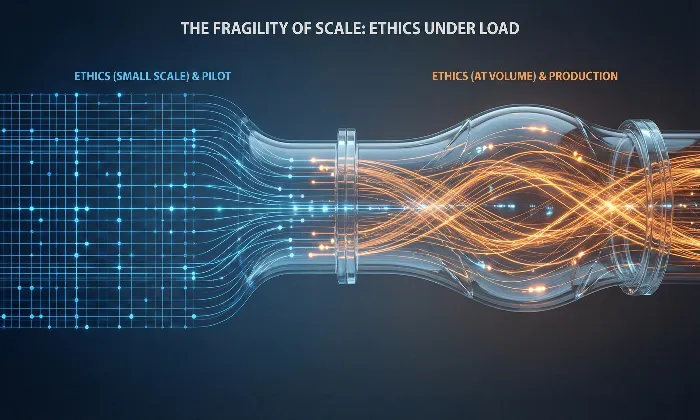
Organizations working with speech technologies often implement structured evaluation pipelines such as those developed by FutureBeeAI. These frameworks help teams assess both technical performance and ethical impact when deploying TTS systems at scale.
By embedding ethical evaluation into the development process, teams can ensure their TTS systems remain inclusive, trustworthy, and aligned with real user expectations.
What Else Do People Ask?
 Share this article on


Related AI Articles

Browse Matching Datasets


Acquiring high-quality AI datasets has never been easier!!!
Get in touch with our AI data expert now!
