How do noisy inputs affect evaluation outcomes?
Data Analysis
Evaluation
Machine Learning
 17 January 2025
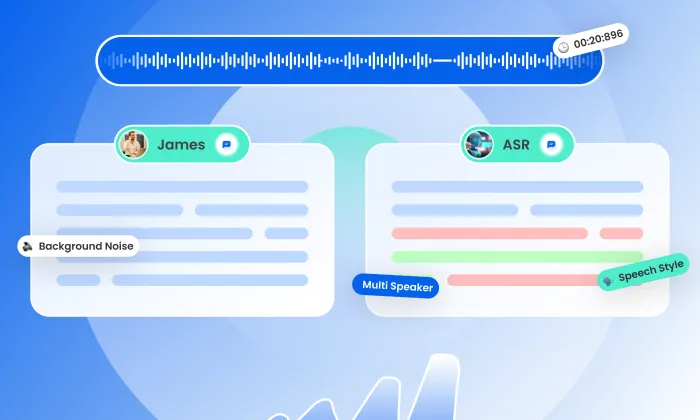
In the intricate world of Text-to-Speech (TTS) evaluations, noisy inputs can quietly distort results and lead to misleading conclusions about model performance. Consider evaluating a violinist not in a quiet concert hall but in a crowded market. The surrounding noise would hide subtle details of the performance and make accurate judgment difficult. In the same way, noisy inputs can interfere with how evaluators perceive TTS models, influencing decisions about model quality and deployment readiness.
Noisy inputs such as environmental disturbances or synthetic audio artifacts can obscure the true capabilities of a TTS system. When these factors interfere with evaluation, the relationship between performance metrics and actual user experience becomes unreliable. For example, a model that produces clear and natural speech in a studio environment may struggle when evaluated under noisy real-world conditions. Background noise can hide pronunciation issues, disrupt perceived prosody, and alter listener judgments.
Ignoring the impact of noisy inputs can create a false impression of model readiness. A system that appears reliable during testing may perform poorly when deployed in everyday environments. Situations like a navigation system mispronouncing street names in a moving vehicle illustrate how real-world noise conditions can affect perceived speech quality and user trust.
Noise can also introduce evaluator bias. When listeners struggle to focus because of background disturbances, their ratings may reflect the environment rather than the speech output itself. This creates inconsistencies in evaluation results and makes it harder to accurately assess model performance.
How Noisy Inputs Distort TTS Evaluation
Masked Speech Quality: Background noise can hide subtle pronunciation errors, unnatural pauses, or prosody issues. Evaluators may overlook problems simply because they cannot hear them clearly.
Misleading Performance Metrics: Evaluation scores collected under inconsistent noise conditions may not reflect the model’s true capabilities. A model might appear stronger or weaker depending on the listening environment.
Evaluator Distraction: External disturbances can affect concentration and introduce bias into human evaluations. When evaluators are distracted, their judgments may become inconsistent.
Real-World Deployment Gaps: If evaluations only occur under ideal conditions, models may appear ready for deployment even though they have not been tested against realistic environmental challenges.
Strategies to Manage Noisy Inputs During Evaluation
Establish Controlled Testing Environments: Begin evaluation in quiet and controlled environments to establish a reliable performance baseline. Eliminating external noise allows evaluators to focus on the model’s speech characteristics without interference. Platforms like FutureBeeAI emphasize structured evaluation environments to maintain consistent listening conditions.
Diversify Input Conditions: After establishing baseline performance, evaluate the model across a range of realistic conditions that include varying noise levels. This helps determine how well the system performs in environments users may encounter in daily life.
Conduct Detailed Post-Evaluation Analysis: Reviewing session logs and evaluation metadata helps identify situations where noise may have affected results. Careful analysis ensures that performance issues are not mistakenly attributed to the model itself.
Implement Continuous Evaluation Loops: Regular evaluation cycles help teams detect performance drift over time. Human evaluators can identify subtle quality issues caused by noise that automated metrics might miss.
Practical Takeaway
Noisy inputs can significantly influence how TTS models are evaluated and perceived. Without proper controls, noise can mask speech quality issues, distort evaluation metrics, and introduce bias into listener judgments.
By combining controlled evaluation environments with realistic testing conditions, organizations can build a clearer understanding of model performance. Structured methodologies such as those used by FutureBeeAI help ensure that evaluation outcomes accurately reflect how models perform in real-world situations.
If you are refining your TTS evaluation pipeline, you can also contact the team to explore structured evaluation frameworks designed to maintain reliability across diverse environments.
FAQs
Q. Why do noisy inputs affect TTS model evaluation?
A. Noise can mask pronunciation errors, distort perceived prosody, and distract evaluators. These effects make it difficult to judge the true quality of synthesized speech accurately.
Q. How can teams reduce the impact of noise during evaluation?
A. Teams can reduce noise impact by conducting baseline evaluations in controlled environments, testing models under diverse real-world conditions, reviewing session metadata, and performing continuous human evaluation cycles.
What Else Do People Ask?
 Share this article on


Related AI Articles

Browse Matching Datasets


Acquiring high-quality AI datasets has never been easier!!!
Get in touch with our AI data expert now!
