Why do models that generalize poorly still score well?
Machine Learning
AI Models
Model Performance
 18 January 2025
In AI development, it is common to encounter models that perform exceptionally well during evaluation but struggle once deployed in real-world environments. This gap occurs when evaluation frameworks fail to reflect the conditions the system will actually face during use.
Strong evaluation scores often create confidence that a model is ready for deployment. However, if the evaluation setup does not mirror real user behavior, real data variability, or real environments, the results may not represent actual performance. This challenge appears frequently in systems such as Text-to-Speech (TTS) models, where perceptual quality can change significantly when exposed to new prompts or contexts.
The Problem with Evaluation Metrics
Evaluation metrics are useful indicators, but they do not always reflect real-world behavior. Metrics such as accuracy, word error rate, or Mean Opinion Score (MOS) summarize performance in controlled settings. These metrics can highlight strengths while masking weaknesses that only appear in broader usage scenarios.
When evaluation relies too heavily on these metrics, teams may overlook issues related to contextual variation, user interaction patterns, or perceptual quality. This can lead to models that appear strong in testing but fail to meet user expectations once deployed.
Overfitting and Its Impact on Real-World Performance
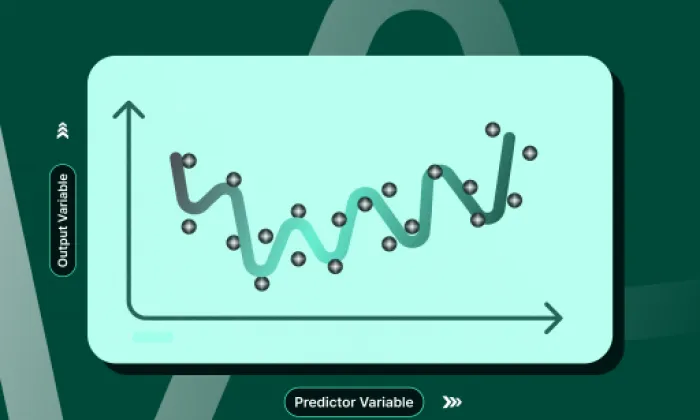
Overfitting occurs when a model becomes too specialized for the data used during training or evaluation. Instead of learning general patterns, the system learns the specific characteristics of the evaluation dataset.
This results in strong performance on familiar inputs but weak performance when exposed to new examples. For instance, a speech system evaluated on prompts similar to its training data may produce high evaluation scores, yet struggle when processing unfamiliar vocabulary or conversational styles.
Preventing overfitting requires evaluation datasets that represent a wide range of real-world conditions.
Why Contextual Evaluation Matters
Evaluation frameworks must reflect the environment in which the model will operate. Without contextual evaluation, models may pass tests that do not represent real user interactions.
Several practices help improve evaluation realism.
Contextual Testing: Evaluation should include realistic usage scenarios. For example, systems expected to operate in noisy environments should be evaluated under similar acoustic conditions.
Diverse Input Coverage: Evaluation prompts should include varied content types, vocabulary, and linguistic structures.
Human Perceptual Evaluation: Human evaluators can detect qualities such as naturalness, emotional tone, and conversational flow that automated metrics cannot fully capture.
Continuous Monitoring After Deployment
Even when evaluation frameworks are carefully designed, system behavior may change after deployment. Data distributions evolve, user expectations shift, and models may experience silent regressions.
Continuous monitoring helps detect these issues early. Post-deployment evaluation allows teams to identify performance drift and adapt the model to new conditions.
Practical Takeaway
High evaluation scores do not guarantee real-world success. Reliable evaluation requires a combination of diverse testing scenarios, human-centered assessments, and continuous monitoring.
Key practices include:
Aligning evaluation datasets with real deployment conditions
Expanding evaluation prompts to cover diverse scenarios
Integrating human evaluation to capture perceptual quality
Conclusion
Evaluation frameworks must go beyond isolated metrics to capture how models behave in real environments. Systems that perform well in controlled testing may still fail if evaluation conditions do not reflect real-world complexity.
Organizations seeking to improve evaluation reliability can explore solutions from FutureBeeAI, which support structured human evaluation workflows and scalable speech testing. Teams looking to strengthen their evaluation processes can also contact the FutureBeeAI team for guidance on designing evaluation frameworks that reflect real operational conditions.
FAQs
Q. Why do some AI models perform well in evaluation but fail in production?
A. This often happens when evaluation datasets do not represent real-world conditions or when models overfit to the evaluation data. As a result, performance appears strong in testing but declines when exposed to new inputs.
Q. How can teams reduce the risk of evaluation failure?
A. Teams should use diverse evaluation datasets, incorporate human perceptual evaluation, and monitor system performance after deployment. These practices help ensure models remain reliable in real-world environments.
What Else Do People Ask?
 Share this article on


Related AI Articles


Browse Matching Datasets


Acquiring high-quality AI datasets has never been easier!!!
Get in touch with our AI data expert now!
