What quality control processes are used to review doctor–patient conversation data?
Data Quality
Healthcare
Speech AI
 13 October 2025
Quality control in doctor-patient conversation data is crucial for developing effective healthcare AI systems. FutureBeeAI implements rigorous quality assurance processes to ensure that datasets for medical NLP applications are both accurate and ethically sound. Here's a detailed look at how we uphold high standards in this area.
Key Stages in Quality Control for Doctor–Patient Conversations
1.Automated Checks
Our initial layer of quality control employs automated checks through the Yugo platform. These checks focus on:
- Duration and Acoustic Quality: Ensuring recordings meet standards for clarity, volume, and capturing the subtleties of natural conversation without distortion.
- Device Validation: Confirming the technical readiness of recording devices, such as mobile phones and headsets, to capture high-fidelity audio.
These automated processes filter out substandard recordings before they advance to further review stages.
2.Medical Review
Following the automated checks, a panel of qualified healthcare professionals conducts a thorough evaluation. This stage includes:
- Terminology and Dialogue Validation: Ensuring language is medically accurate and dialogues reflect realistic clinical interactions.
- Realism Assessment: Verifying that conversations maintain a natural flow, capturing conversational dynamics like interruptions and emotional cues.
This expert review ensures that the data is both technically sound and clinically relevant, providing a reliable foundation for AI models.
3.Transcription and Annotation Quality
Transcribing and annotating the audio data is a meticulous process, emphasizing:
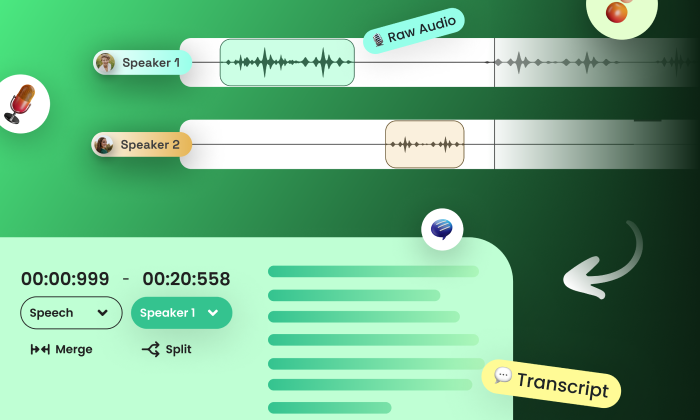
- Verbatim Transcription: Capturing every nuance of natural speech, including pauses and informal expressions, to train AI models effectively.
- Annotation Layers: Each transcript undergoes a dual-layer quality assurance process, involving linguistic accuracy checks and medical expert validation. Annotations may include intent tagging and empathy detection.
This thorough approach guarantees that the dataset can support a range of applications, from speech recognition to sentiment analysis.
4.Ethical Compliance and Anonymization
Maintaining ethical standards and privacy compliance is a cornerstone of our quality control. We ensure:
- Informed Consent: All participants provide explicit consent prior to data collection, ensuring transparency.
- Anonymization Protocols: Personal identifiers are replaced with placeholders, and any accidental disclosures are masked in audio and tagged in transcripts.
Our commitment to ethical compliance ensures that datasets are both realistic and safe for AI training without compromising privacy.
Real-World Implications
These quality control measures significantly impact the effectiveness of healthcare AI systems. By ensuring data accuracy and realism, AI models trained on our datasets can better understand and respond to clinical interactions, ultimately enhancing patient safety and care quality.
FutureBeeAI stands as a trusted partner in AI data collection, offering expertise and scalability in producing high-quality, ethically compliant datasets for advanced medical NLP applications.
Smart FAQs
Q. What types of annotations are included in doctor-patient conversation datasets?
A. Annotations typically cover intent tagging, sentiment detection, speaker roles, and classification of conversational turns, enabling nuanced understanding and analysis of medical interactions.
Q. How is patient privacy maintained in these datasets?
A. Patient privacy is safeguarded through informed consent, anonymization of identifiers, and strict adherence to ethical guidelines, ensuring no real patient data is captured or disclosed.
What Else Do People Ask?
 Share this article on


Related AI Articles

-data-collection/thumbnails/card-thumbnail/top-resources-to-gather-speech-data-for-speech-recognition-model-building.webp)
Browse Matching Datasets


Acquiring high-quality AI datasets has never been easier!!!
Get in touch with our AI data expert now!
