How can evaluation detect over-specialization?
Model Evaluation
Machine Learning
AI Models
 1 January 2025
Detecting over-specialization in AI models is not just a technical exercise, it is critical for ensuring these models perform reliably in real-world conditions. When this issue goes unnoticed, models may appear strong in testing but fail in practical usage, leading to poor user experience and reduced trust.
Why Detecting Over-Specialization Matters
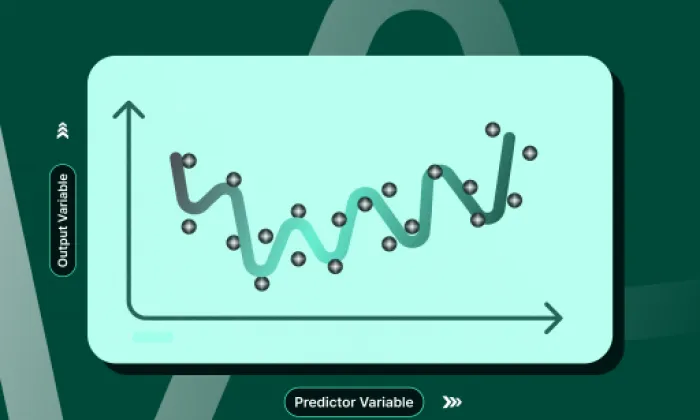
Over-specialization occurs when a model performs exceptionally well on a narrow set of conditions but struggles when exposed to variation. In Text-to-Speech (TTS) systems, this often appears as strong performance on scripted or training-like inputs, but weak performance on conversational, domain-specific, or unexpected inputs.
A model that sounds natural in controlled prompts may break down when handling real user interactions, accents, or long-form content. This gap between lab success and real-world reliability is where over-specialization becomes a serious risk.
Signals That Indicate Over-Specialization
Performance Drops on Slight Variations: Small changes in phrasing, tone, or domain lead to noticeable degradation in output quality.
Strong Results on Seen Data Only: The model performs well on familiar prompts but struggles with unseen or diverse inputs.
Long-Form Degradation: Output quality declines over longer sequences, revealing instability in consistency and prosody.
Inconsistent Handling of Rare Terms: The model fails when encountering uncommon words, names, or domain-specific vocabulary.
Effective Strategies to Detect Over-Specialization
Diverse Test Sets: Use prompts across multiple domains, speaking styles, and linguistic variations. This ensures the model is evaluated beyond its training comfort zone.
Attribute-Level Evaluation: Break performance into dimensions such as naturalness, prosody, pronunciation, and intelligibility. This reveals hidden weaknesses masked by aggregate scores.
Paired Comparisons: Compare outputs against baselines using A/B testing to identify where the model performs inconsistently across contexts.
Continuous Evaluation: Monitor performance after deployment using fresh data and updated scenarios. This helps detect drift and emerging weaknesses early.
Disagreement Analysis: Investigate evaluator disagreements. Diverging opinions often signal context-specific failures or uneven performance across attributes.
Practical Takeaway
Over-specialization is not always obvious, but it is one of the most common causes of real-world model failure. Detecting it requires moving beyond static test sets and single metrics.
A robust evaluation approach focuses on variability, human perception, and continuous validation. The goal is not just to build a model that performs well in controlled environments, but one that adapts consistently across real-world conditions.
For support with robust evaluation pipelines or speech data collection, feel free to contact us.
FAQs
Q. How can over-specialization be detected early in TTS models?
A. By testing the model on diverse datasets, evaluating across multiple attributes, and using comparative methods like A/B testing to uncover inconsistencies.
Q. Why is over-specialization dangerous in real-world deployment?
A. Because models that perform well in controlled environments may fail when exposed to real-world variability, leading to poor user experience and unreliable performance.
What Else Do People Ask?
 Share this article on


Related AI Articles


Browse Matching Datasets


Acquiring high-quality AI datasets has never been easier!!!
Get in touch with our AI data expert now!
